
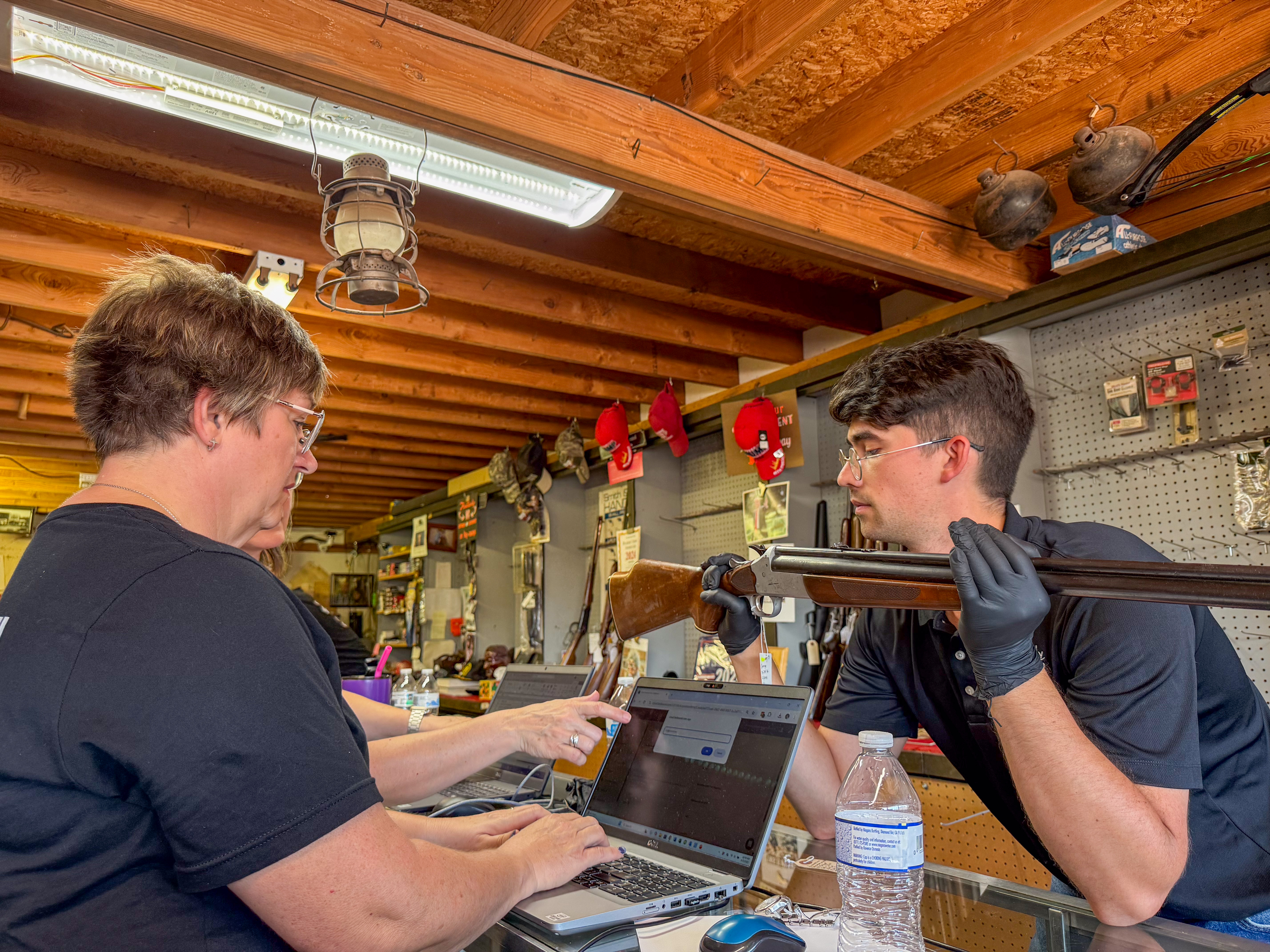
Firearms are a significant part of our auction business at United Country Heard Auction & Real Estate, and what most people don't see is the work that happens before a single item goes live. We're talking hundreds of hours of meticulous research to ensure every piece is accurately documented and properly authenticated. So let's take a look behind the scenes of our recent online firearm auction with over 150 vintage guns in its catalog.
The Scale of the Work
When a collection this size comes through our doors, we're looking at:
150+ individual firearms spanning multiple centuries
Dozens of manufacturers from around the world
Production dates range from the 1870s through the early 1900s
Multiple countries of origin: United States, Switzerland, England, Germany, and more
Time investment: Hundreds of hours dedicated to visual inspection, serial number research, historical documentation, and creating detailed specification sheets. Some firearms take 30-60 minutes to research. Others? Six to ten hours—or more.
The Research Process
Visual Inspection & Documentation
Every firearm begins with a hands-on examination. We record all serial numbers and their locations, manufacturer markings, patent dates, proof marks, inspector stamps, model designations, physical specifications, and unique features.
The challenge: Many antique firearms have worn, faint, or partially illegible markings. We use multiple light angles, magnification, and comparison with reference materials to capture every detail—sometimes spending 20 minutes just trying to decipher a single worn serial number.
Manufacturer & Historical Research
With physical data documented, we move into historical verification. Here's where it gets complicated: Take C.S. Shattuck Arms Company from Hatfield, Massachusetts, which operated from 1878 to 1908. They produced firearms under multiple brand names, including "American," "Queen," and "Unique." They also manufactured for distributors like J.P. Lovell Co. of Boston. Without understanding these relationships, you'd completely miss proper attribution.
Manufacturer's marks indicate the company or individual who created the firearm, while serial numbers help determine age and authenticity by aligning with known production records. When a single manufacturer operates under five different names, proper attribution requires cross-referencing multiple historical sources and understanding complex business relationships.
Technical Verification & Authenticity
This phase is critical for authentication. We verify caliber/chambering, confirm action types, inspect rifling patterns, detect conversions, and interpret proof marks.
Here's where technical knowledge becomes essential: Many military firearms were modified during their service life. Swiss Model 1899/1900 rifles, for example, were commonly converted to Model 1900/11 specifications with new barrels and rechambering.
How do you detect these conversions? By counting rifling grooves. The number of grooves in the barrel reveals whether a rifle retained its original chambering or was upgraded. This affects collector value and historical accuracy.
These details matter
A Real-World Example
Let me show you what this looks like in practice.
Among the 150+ firearms in this auction, we encountered a Swiss Schmidt-Rubin Model 1899/1900 Kurzgewehr, serial number 73951. Initial visual inspection revealed matching serial numbers across all major components and Swiss military unit markings.
The research process:
Serial number dating: Consulted Swiss military production tables—manufactured in 1905, delivered to Artillery Depot, Baden
Technical inspection: Counted rifling grooves—found original 3-groove configuration
Historical significance: Discovered this was an unconverted example—most Model 1899/1900s were upgraded between 1913-1920
Chambering identification: Identified as 7.5×53.5mm GP90
Collector value assessment: Recognized this as a rare surviving original configuration
Without this research, it would have been listed as "just another Schmidt-Rubin." Instead, we documented a piece with specific historical significance.
This level of detail was repeated across every firearm in the collection.
The Challenges
Pre-1850 European firearms often don't exhibit commercial proof marks, making them one of the hardest categories to research properly. We encounter worn or illegible markings, company records lost to time, conflicting information in reference materials, and unmarked firearms.
The solution? Cross-referencing multiple sources, examining physical characteristics, comparing with documented examples, and leveraging collector databases and international resources like Swiss military rifle databases, European proof mark references, and collector networks.
Our Commitment & Collaboration
Here's something important: While we invest hundreds of hours into proper documentation, we also recognize our limitations. Expert collectors who have spent decades specializing in particular manufacturers often possess knowledge that goes beyond what any auction house can achieve in a condensed research period.
That's why we actively welcome corrections and additional information. If a bidder spots an error or can provide more detailed information, we encourage them to reach out.
Here's a real example: One firearm in this sale appeared to have an original crescent metal buttplate based on visual inspection. However, a knowledgeable bidder reached out to note that metal buttplates were not offered on that particular year model—meaning this was a replacement part, not original. This kind of specialized knowledge helps us provide more accurate information and serves the entire collecting community.
Our commitment: We provide the most thorough research possible within our operational constraints, but we acknowledge that specialized collectors often catch details we miss. This collaborative approach benefits everyone and upholds the integrity of the market.
Why This Research Matters
For Buyers: Authenticity verification, research-backed documentation affecting collectibility, and understanding the historical significance of what they're purchasing.
For Sellers: Professional documentation builds trust, research-backed valuations maximize returns, proper classification ensures legal compliance, and detailed descriptions attract serious collectors.
For the Community: Historical preservation through proper documentation, educational value contributing to collector knowledge, and market integrity that benefits everyone.
The Reality Behind the Work
It's not glamorous—deciphering worn serial numbers under magnification, cross-referencing obscure manufacturer records, reading production tables with thousands of entries, translating foreign language source materials.
But it's essential. A single overlooked detail can affect value and authenticity. Missing conversions affect both historical accuracy and collector value. Proper documentation protects both buyers and sellers. Historical accuracy honors the firearms' stories.
With 150+ firearms in this auction, every serial number was researched, every manufacturer was verified, every technical specification was confirmed, and every marking was documented.
This is the standard we hold ourselves to at United Country Heard Auction & Real Estate—whether we're researching antique firearms, cataloging estate contents, or marketing residential properties. The details matter. The research matters. Getting it right matters.
View the Auction Catalog - Bidding Closes 11/11/25 at 6 PM
Cadence Richeson is a broker associate and auctioneer specializing in residential and land sales. If you have questions about vintage firearms or about our research process, feel free to contact him at 580-309-4872.